This year has brough a lot of change, but we’re still here, helping clients plan and build for what the future will bring.
When I’m Sixty-Four
There’s a trend developing in home design that’s focused on aging in place and multi-generational living. More and more, we are getting inquiries about renovating or building new to address these needs.
The CDC defines aging in place as “the ability to live in one’s own home and community safely, independently, and comfortably, regardless of age, income, or ability level.” In various surveys, most Americans report they do want to stay in their own homes as they age. According to Pew Research Centers, the percentage of Americans 85 and older living in nursing homes and other elder-care facilities has declined dramatically in the past 30 years. Seniors are staying healthy and active longer and are more likely to live at home alone. Still, for many families, more assistance or home modification is needed to facilitate seniors living independently.
What we’re seeing in terms of home building or home renovation to support aging falls into three categories. In the first, adult children are looking to expand their home so Mom or Dad can move in but still be independent. This may mean an addition with a separate entrance, bath, and kitchen—or a renovation of an existing space. In a second category are folks in or near retirement planning a home that will suit their active lives now but be easily adaptable should they suffer declining mobility in the future. These homes might include an elevator, or a guest suite for an eventual caretaker or visiting children and grandchildren. A third group is comprised of people who have purchased their parents’ home in which to raise their own families and are making alterations so that the parent(s) can move into private quarters within the home.
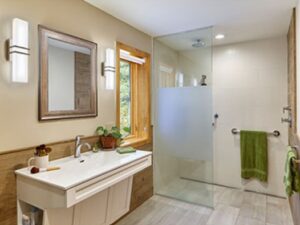
The Dad Pad
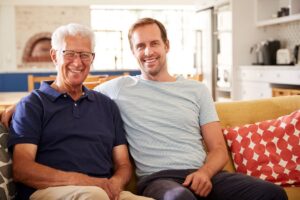
One of our clients in the Philadelphia suburbs, Chris, is of the first category. His dad, Pat, had been living on his own in another city. At 84, and a retired Army colonel, Pat is the very definition of independent. He’d moved into a condo in his 60’s, sensibly planning on growing older without the hassles of lawn maintenance, snow removal, or stairs.
All was apparently well, until Chris got word from a family member that Pat seemed out of sorts. When Chris questioned his usually happy-go-lucky dad, he was surprised to hear Pat admit to feeling down about bum knees, old friends dying, and loneliness.
While Chris vowed to find a way to visit his dad more often, it was his wife Marlene who came up with a different solution. One morning she said to Chris, “come here, I want to show you something.” She pointed at the view from the large picture window at the rear of their house, and asked Chris to take a look. Puzzled, Chris saw squirrels, lawn, trees. “This is where we build your dad’s suite,” Marlene explained.
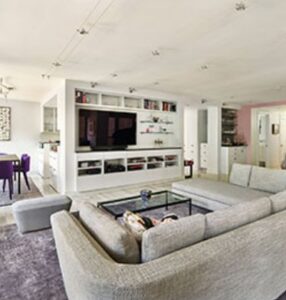
After some initial hesitation, Pat got on board with the idea pretty quickly. “Let’s do this,” he said. The family enlisted our help to create the “Dad Pad” addition, a complete single-story suite for Pat. It has its own entrance as well as an entrance to the main house. Although modest in size, it has a bedroom and sitting area, a full bath with a walk-in shower, and a separate eat-in kitchenette with stacked laundry facilities. There’s even a small private porch facing the garden.
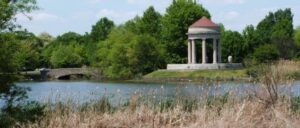
Local Spot: FDR Park
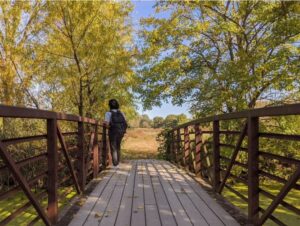
Originally called “League Island Park”, this is Philadelphia’s only park designed by the renowned Olmstead Brothers firm.
Nearly 350 acres, the park was created in the early 20th century from marshlands along the Delaware River. South
Philly locals have long known it as “The Lakes.”
The old golf course on the site has closed, reverting to 200 acres of streams, wildflower meadows and trails enjoyed by hikers, runners, and birdwatchers. The park is currently closed to motor vehicles on Sundays. Every Sunday in November, Wild Philadelphia will offer FDR Park Nature Therapy–guided walks through the meadow trails and tips on therapeutically connecting with nature.
Buildings on site include the 1916 Boathouse on the main lake, the American Swedish Historical Museum, and Bellaire Mansion, one of the oldest buildings in Pennsylvania, dating to perhaps 1670. There are picnic areas, and on summer weekends the park is home to an amazing Cambodian food market. A paved road circles the lakes and athletic fields.
A master plan for FDR was unveiled in 2019 to develop an Ecological Core with emphasis on nature and habitat, and an Urban Edge, with state-of-the-art athletic fields and playgrounds. The park is accessible by bus, subway, and bike. Some on-street parking can be found near the 20th Street entrance.
Featured Iconic Building: Kampung Admiralty
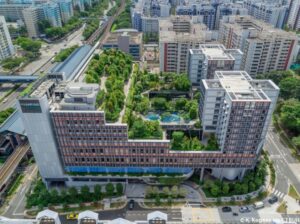
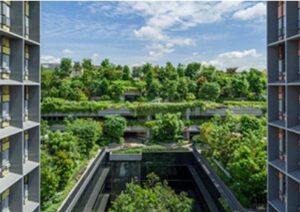
Kampung Admiralty in Singapore was named World Building of the Year at the 2018 World Architecture Festival.
Designed by WOHA Architects of Hong Kong, the project was commissioned by the Singapore Housing & Development Board as a prototype for senior housing within the community.
Given height and footprint limitations, the architects designed the project as a layered vertical village–“Kampung” refers to a traditional Malay village. A little over two acres, the site is adjacent to the Admiralty train station. Everything about the project was designed to encourage active living, community, intergenerational connection, and aging in place.
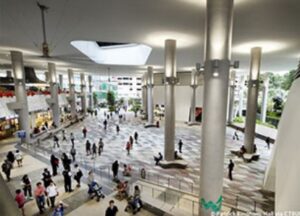
The lower level Community Plaza is an all-weather public “living room.” It’s a large social gathering space with greenery and a pond, with access to a pharmacy, a supermarket and other shops, and the “hawker center,” a Singapore-style food court. The middle layer of the development contains a two-story medical center for specialists and outpatient surgeries. The upper layer, Community Park, is comprised of two apartment towers and a terraced outdoor park or village green in the development’s interior.
The 104 studio apartments are reserved for singles and couples 55 and older. Each has basic laundry and cooking facilities, grab bars, and non-slip floors; the entire development is wheelchair friendly. A childcare center and senior “active aging hub” are side by side, encouraging intergenerational socializing. “Buddy benches” in public areas encourage residents to come outside and chat with neighbors. Programs on site offer work and volunteer opportunities to keep residents active and engaged.
The Community Park gardens recycle stormwater runoff into the rain garden below and the rooftop community farm above. The buildings’ overall design plus the greenery and shading devices allow for natural ventilation and optimal daylighting, with minimal need for air-conditioning. The entire project is an outstanding model of what good design can do to serve the needs of individuals and community.